Everybody loves a good assassin. Well, maybe not everybody, but in fiction? Absolutely.
The trouble with the Assassin in Dungeons & Dragons is that, as written, it is kind of underwhelming. It’s got the Rogue’s Evasion ability and it carries poisoned weapons, but that’s about all the stat block offers you. For a new DM, the Assassin may seem a little lacking in terms of how to use it in a combat encounter, and will likely fold in a round or two under your players’ blades and spells.
Well, that’s why a combat encounter is the last place you should put your Assassin.
Think about your favorite assassins in fiction. John Wick. Jaqen H’ghar. Black Widow. All different, all amazing, and absolutely none of them went down to a bunch of adventurers who then looted the body and forgot they existed an hour afterwards.
In a game of D&D, an Assassin is more than just a killer. Anyone can be a killer. An Assassin has panache. An Assassin has plans. An Assassin is like a ghost – there one moment, gone the next, and no one is even sure they were there at all. Assassins should be masters of disguise and creatures of the shadows, able to get to their targets unnoticed, and that offers you a wonderful range of people for your assassin to be.
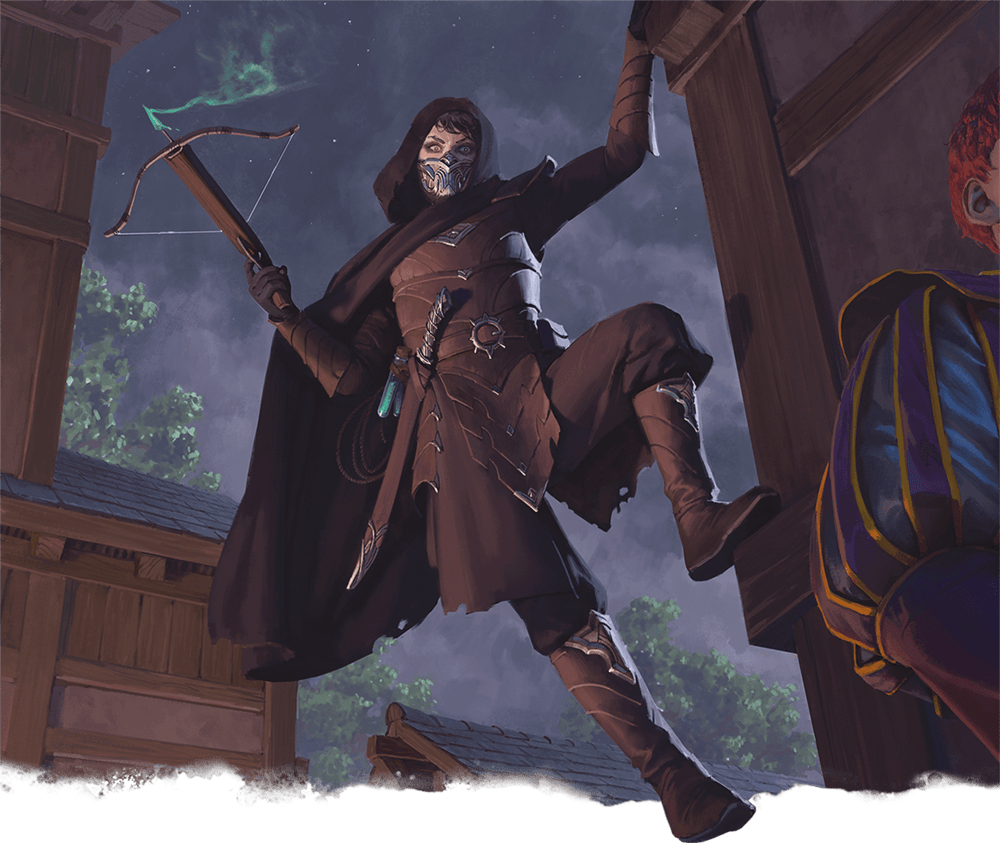
I’m personally a big fan of the Shadow In the Night assassin. They keep to the darkness, slink about unseen, and strike without warning. This Assassin isn’t looking for glory or fame – they’re looking to do the job they’ve been hired to do. Even the client might not know who this person is, but rather hires them through an intermediary. Names need not enter into this game of death, after all.
Political Assassins are a classic variant. They’re specialized killers, trained in every method of murder and bankrolled by a hostile government. They have contacts and connections and resources, and they’re ready to bring chaos to whichever kingdom or nation they have been sent to destabilize.
Then you’ve got the Vendetta Assassin. This person has been personally wronged, and have a short list of people who need to be put in the ground. This person may not be formally trained in the arts of death-dealing, but they’re going to see their targets out of this world one way or another, even at the cost of their own lives.
The common point between these and other varieties of Assassins is that they’re not looking for a fight, especially not a fight with a heavily-armed adventuring party. They want to be in and out without anyone but their target noticing.
So, if an Assassin’s whole motive is to not be noticed, then what role are they meant to play in your adventure?
The Assassin is best used as a story vector.
For you, the Assassin is more than just a story beat. The Assassin is the story. An Assassin should be the reason the adventure exists, and the Players’ mission is to either stop the Assassin from killing someone, or – and only use this if you’re feeling exceptionally devious – to make sure that they succeed.
In that way, the Assassin doesn’t really show up in your story except in the beginning or the end. In the beginning, an assassination could be what kicks off the story, taking out an important leader or – more cruelly – a friend of the Party. The adventure can then be to find the assassin before they skip town, or before they kill again. The longer that process takes, the more bodies hit the floor. Every new victim adds urgency. The clock is ticking.
Having your Assassin come into play at the end of your story engages your players in better understanding the world you have made. Who are these people being targeted and what role do they play? How does word of an incipient assassination even come to your players – have the built up a network of informants? Have they built up contacts that trust them with this information? Investment in the world means more ways to solve the problem.
Not every Assassin has to be a villain, though. Maybe you have an Assassin who’s of the Chaotic Good bent? Someone whose targets are the wrongdoers, the mob bosses, corrupt politicians or city guards on the take? Is that someone your players are going to want to take in, or will they let the Assassin have their way? Or, more dangerouly, help them out?
The Assassin they might be trying to stop might, in fact, be one that really needs to succeed. The new, young noble on the Royal Council seems like a great guy, sure, but he’s been secretly stealing children to sacrifice to his Dark God in exchange for more power, and the families of those children have pooled their money to hire someone to stop him.
If your party enters combat with an Assassin, unless they’re very low-level, there’s a good chance they’ll win. And, once they’ve looted the body, your players will turn to you and say, “Well, that guy wasn’t so bad.”
But if they’re constantly chasing that Assassin, one step behind the whole way, leaping over the bodies of their victims and desperately trying to find out their moves, then that character, whether they defeat them in combat or not, will stand out in their memories of all-time great adventures.
Never bring a knife to a narrative fight, is what I’m saying. Give your story to the Assassin and see what happens. Your players will thank you.
 Encounter Every Enemy
Pingback: Drown Them All: Making Use of Water Elementals | Encounter Every Enemy
Pingback: You Can Kill Them, But Should You? Nobles in D&D | Encounter Every Enemy
Pingback: Unseen, Unheard, Unstoppable: Running Invisible Stalkers | Encounter Every Enemy