Your Party is moving through the wilderness, journeying to find the warlock’s lair where they can try to find the Painted Skull of Exuellihin that they need in order to move on to the next stage of the adventure. The woods are dark and deep, and they’re finding their way through with only a few failed Survival rolls here and there. They feel like they’re making progress, nearing their destination, and everything is going well for them.
In a clearing in the great and haunted woods, they find a Scout, bleeding and probably close to death. This Scout had also been sent to find the Skull – it’s a potent object, and wanted by many different factions. But this Scout ran into something they weren’t ready for, and they won’t be able to report back. Without this information, anyone who gets near the warlock’s lair will die – your Party included.
So: what does your Party do about this?
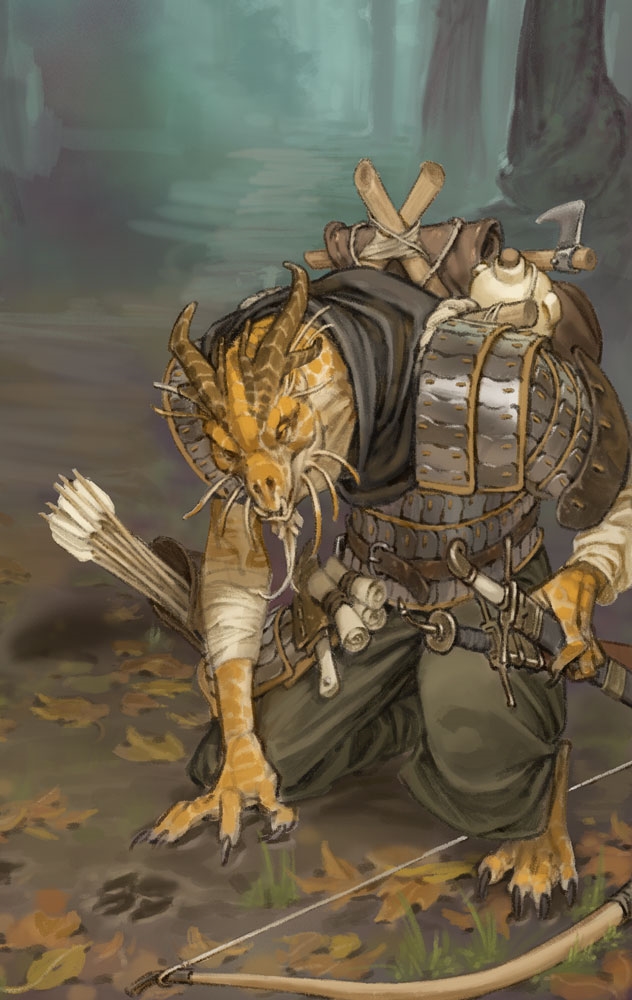
The Scout stat block is built for stealth, speed, and survival — everything they need to see without being seen, and return with what they’ve learned. In the 2024 Monster Manual, there are two varieties of Scout: the Scout and the Scout Captain. Both are adept at Perception, Survival and Stealth, as you might expect. The garden-variety Scout is also skilled at Nature, a skill which apparently ebbs as they move up in the ranks to Captain. Maybe being in charge means less time in the field, learning about the natural world.
The regular Scouts also get two longbow and/or shortsword attacks, though I reckon they would prefer to remain at a distance; the ability to hide and get away is most in their job description, so fighting close-quarters with a sword is probably for their desperate last stand.
When a Scout graduates to Captain, they get a couple of extra tricks: the ability to Aim as a bonus action and gain advantage, as well as the Rogue’s Uncanny Dodge reaction, reducing damage done to it.
With these abilities, Scouts are an interesting type of character in D&D. By their nature, they’re meant for information-gathering rather than combat. A Scout avoids combat unless they’re sure of the upper hand — or the exit. Their job is to get out ahead of the main forces and see what they can see, then report back.
With that, let’s approach Scouts in your game with that in mind: these are the People Who See Things.
If your Party is moving through the wilderness, a friendly Scout NPC could be their very best friend. These are your frontier survivalists who thrives where the maps end. With their help, your Party should be able to survive longer, against worse odds – if they pay the asking price, that is. Knowledge is, of course, valuable, and a good Scout navigates truth just as much as they navigate the land.
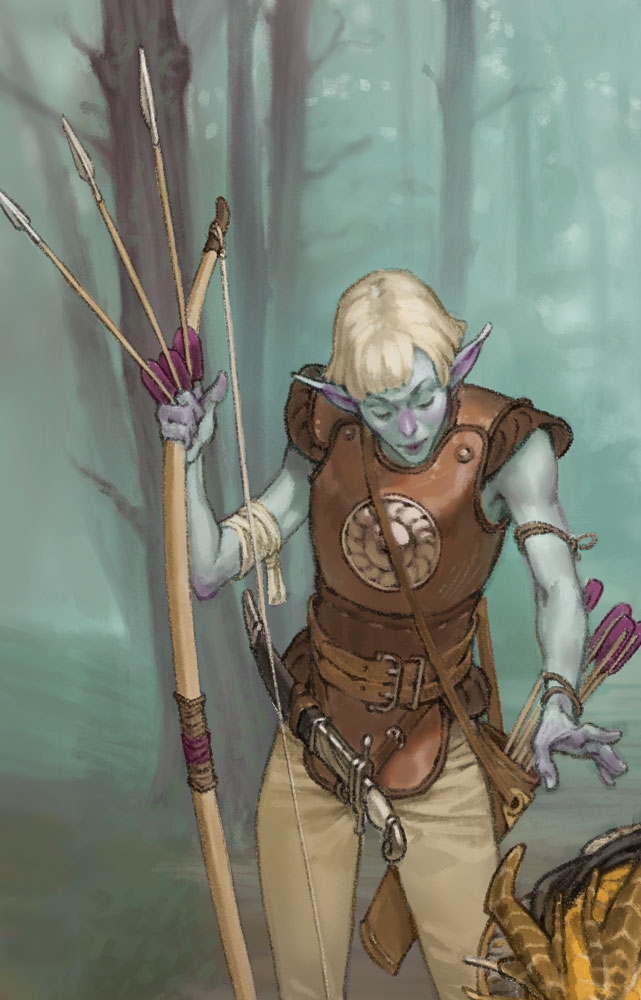
Or you can come at this from an opposite direction: your Party comes upon a small village, deep in the Wilds, that survives because their people have a long tradition of Scouting. Generations of Scouts have kept this place safe. But now, one by one, they’ve begun to vanish. How can your Party help these people find their most treasured citizens and stop whatever it is that’s taking them? And if they do, what terrible knowledge do the Scouts bring back with them? What dangers have they seen in the wild lands that their neighbors need to know about?
In a more political campaign, your Party might capture an enemy Scout. What would they do with this information gold mine? Perhaps the military leaders your Party is working with want to torture the captive – are your players the kind of people who will let that happen? Will they try a more persuasive approach, and how long will the soldiers they’re working with let that happen? The information that Scout has could save lives, after all.
And the Scout? They know exactly what happens to those who talk. They have a responsibility to the people who sent them, and they are the only people in their organization who know what they know. They might be looking for a way out themselves, one that either gets them back to their people, or one from which there is no going back at all.
Scouts walk ahead of the known world — and sometimes, they don’t come back whole. It’s a bright, sunny day, perfect for traveling from one adventure to another. A disheveled, injured Scout staggers out of the woods towards your players. Their physical injuries seem survivable, but one look in their eyes tells you that this person is not going to survive whatever they saw amidst those trees. Some visions aren’t meant to be brought back. But a Scout doesn’t get to choose what they see, only whether they tell someone.
The Scout’s toolkit is a DM’s dream: flexible, flavorful, and always useful. You could have an old, retired Scout pulled away from the inn they’ve been running so they can do One Last Job. Or perhaps, while escorting the heir to the sacred priesthood of Mystra to their temple, your Party realizes that they’re being followed. A small cadre of Scouts has taken it upon themselves to make sure you and your precious cargo are safe. Perhaps the death of a Scout triggers a border war between two nations that have been itching to find an excuse to attack each other.

You could also play with factionalism in your game: a Scout from the Emerald Enclave can read the bark and the birdsong like a form of scripture. A Lord’s Alliance Scout watches supply lines and city walls. A Scout from a resistance group would look for footsteps and escape routes, while Scouts from powerful kingdoms would look for unrest and flaws in the power structures.
The truths that Scouts see aren’t always compatible, but each is deadly in its own way.
Scouts are the People Who See Things. That makes them powerful. They can not only win battles, but know how to avoid them. They don’t hold great authority or political power, but what they see can save a kingdom, doom a city, or drive them mad.
Use them well, and Scouts will change how your world unfolds. Because the moment they come back and say “I saw something,” the story shifts.
 Encounter Every Enemy