We used to have a Pug.
His name was Milo. He loved a good nap, snored like an angry truffle pig, and let the cats walk all over him. The only time I ever saw him truly angry was when a delivery person came to the door, and that’s when the snarling, wheezing fury came out.
Now imagine Milo, but the size of a Clydesdale, with bone-crushing jaws and no patience for anyone trespassing on his turf.
That’s a Dire Wolf.
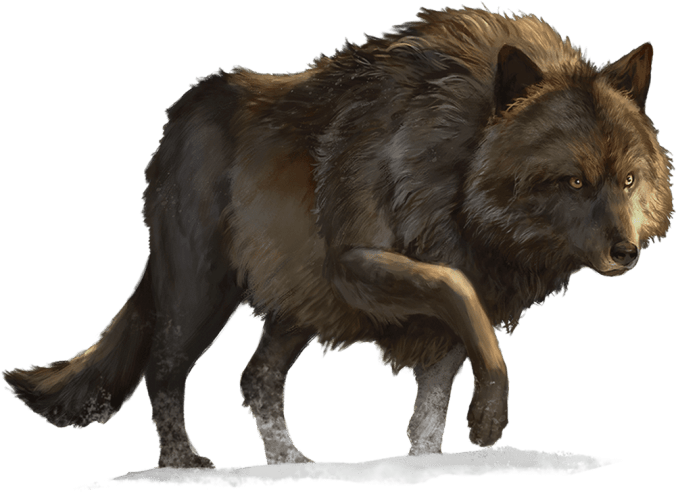
Dire Wolves aren’t just giant wolves. They’re the ancestral memory of everything we think we’ve domesticated, come back to remind us that the wild is never truly gone.
What might it feel like to face down something that feels so familiar, and yet is utterly alien to us? We’re so used to dogs as our loyal companions and steadfast friends that we forget what wolves are, and this could be a concept that you can build an entire campaign around — the longing for the simple and familiar, only to find that it’s grown teeth and wants to eat you.
Like many Beast encounters, there are a lot of good ways to introduce a Dire Wolf – or, ideally, a whole pack of them – to your players. Dire Wolves are pack hunters. Bring them in groups to make use of their Pack Tactics, and turn your heroes into chew toys.
You should build up your encounter with a certain amount of dread in mind. As your party travels, they catch glimpses of grey fur. Maybe they hear low growls carried on the wind towards them. The glint of eyes just beyond the reach of the firelight at camp. An eviscerated Elk in their path. You can spend in-game days making it very clear that they are being hunted by creatures that are not letting themselves be seen. Every rest becomes a risk, and the snap of a twig will be the call to battle.
When they do attack, they should make the most of those Pack Tactics and start pulling people down. But, don’t be afraid to split them up as well! If their attack is successful, they can knock a player prone, conferring advantage on someone else. This doesn’t help if another Wolf is attacking the same target – advantage doesn’t stack – but if your Wolves happen to be fighting alongside another creature, that prone condition becomes an asset.
Ultimately, this fight against Dire Wolves should be full of blood and teeth and terror.
Milo would’ve barked at a Dire Wolf, too. I don’t think it would have mattered.
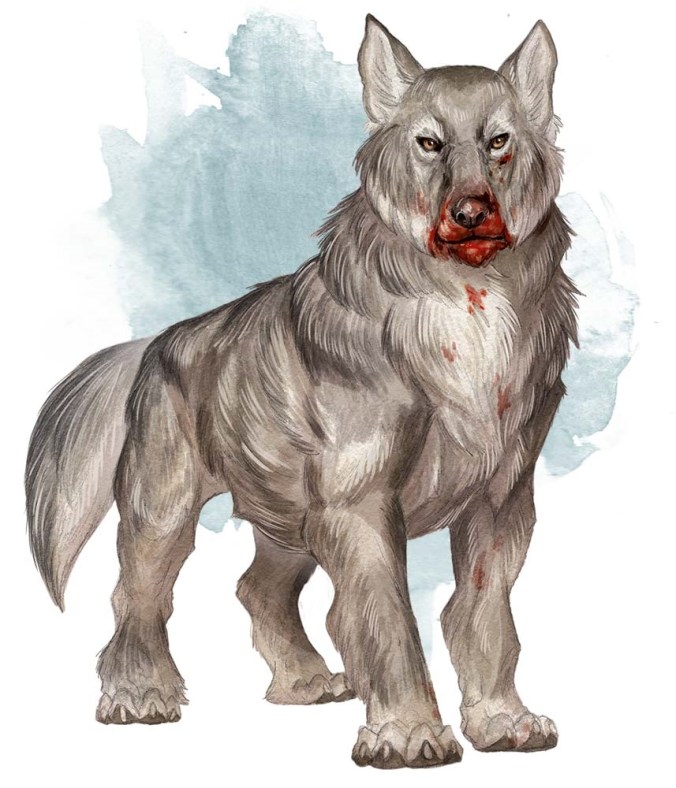
But is that all a Dire Wolf encounter should be? Just another bloody milestone on the road?
We have to remind ourselves, when we see a Wolf, that they may be friend-shaped, but they are not friends. They are creatures of the Wild, a place we abandoned long ago. In our abandonment, we took some of their ancestors and tamed them. Gave them a place by our fire and a role in our lives, and now we think we know the Wolves that they might have been.
What a surprise it will be when they pile on and try to tear our throats out.
In a campaign that’s about the return of what we thought was gone, Dire Wolves can be at the vanguard of that encroachment. Tearing into farms and rural communities. Disrupting trade routes. Interrupting the vital farming and logging and mining work that’s needed to keep civilization going. These soft, civilized humans won’t know what to do when the teeth and claws come out of the deep forest, and that’s what your Adventurers are for.
They are the heart of a Druidic Wild Hunt. Those who speak for the trees are done speaking, because no one has been listening. With their Wolves as the leading edge of an attack, they seek to terrify those troublesome “civilized” people and remind them where they came from. In time, your Adventurers will have to stop all of humanity from being dragged back into the mud from whence they crawled so long ago.
Or how about this: The dogs are gone.
Not just the adorable decorative dogs like Milo. The hunting dogs, guard dogs, farm dogs, racing dogs – every single dog within a hundred miles has up and vanished. Hastily-printed posters have gone up on walls around the city. People are bringing ragged collars and chew toys to every wizard with even a pinch of Divination magic in their repertoire.
And then you find out: the dogs aren’t gone.
They’ve left.
The Dire Wolves have called their civilized cousins home, promised them freedom instead of a comfortable cage. But not until they deal with the humans who, in their arrogance, twisted their minds and bodies for millennia, turning them away from their true nature.
And now, they come. The Pugs and the Dachshunds. The Labradors and the Dalmatians. The terrifyingly smart Shepherds and the simply terrifying Chihuahuas.
They come, with Dire Wolves at their back, to reclaim what was stolen from them.
Go ahead. Try to solve that with a fireball.
 Encounter Every Enemy
Pingback: Giant Weasel: CR 1/8, Vibes 10/10 | Encounter Every Enemy