If all you were interested in when building your D&D world was the CR of monsters, you probably wouldn’t give the Noble a second look. They have a CR of 1/8 – just one step above Seahorses and a stiff breeze – which realistically means they won’t give much of a fight to a Party beyond Level 3 or so. And that’s if they gang up on them.
Sure – they have a rapier, and their Parry ability is kind of annoying, but they also only have 9 HP on average, so even a Level 1 party can probably take one down if the initiative rolls are kind.
The problem isn’t killing a Noble.
The problem is what happens after you’ve killed a Noble.
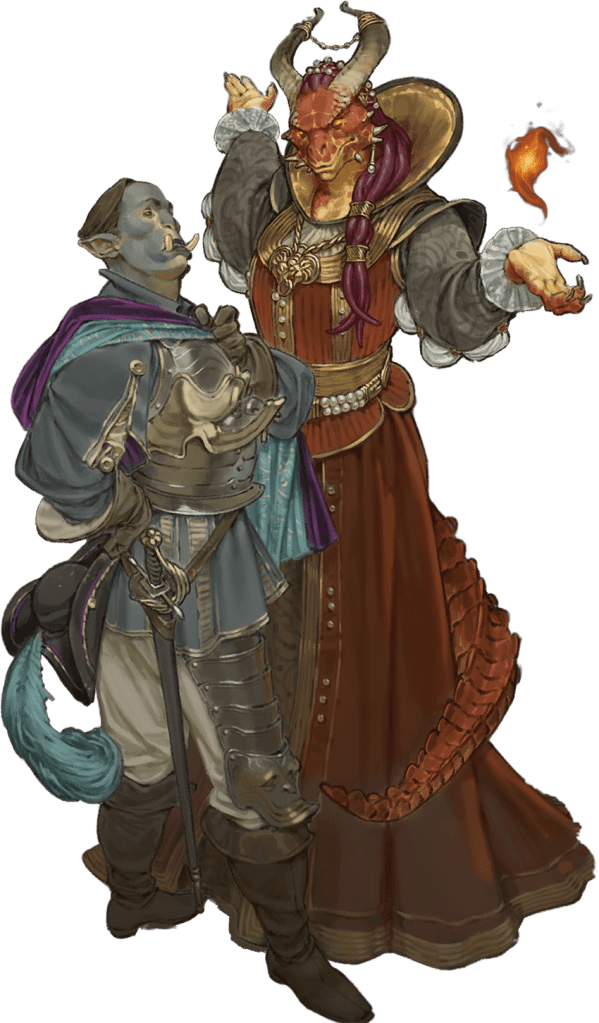
You see, in one respect, yes – the Noble is a weak and easily-beatable creature. But in reality, the Noble is probably one of the most dangerous creatures in the Manual, and you kill them at your own peril.
If you haven’t guessed, this is where D&D gets political. Now some people say they don’t want politics in D&D, but the truth is, it’s unavoidable. Politics is the discussion a community has about what its rules are, and if you have a Noble in your game, then that discussion has already been decided. Some people have power, other people do not, and that is where your game goes from being just a hack-and-slash monster movie to being a game with reality and stakes beyond your Party’s XP totals.
Nobility, in pretty much every culture, comes with resources. Land, money, retainers, connections – all the things that allow the Noble to do the things they want to do. Now sure, some Nobles are going to be, well… noble with these resources. They may look after the people in their employ and use their resources for the benefit of the people they govern. If they adhere to a generous understanding of noblesse oblige, they may be a force for good – and an excellent ally for your Party.
With a Noble on their side, your Party will have much greater access to the resources they need to complete their quest. Gold, experts, old documents – maybe even some magical family heirlooms will come in handy as they try to lift the curse on the Noble house, put the spirit of an ancient patriarch to rest, or find evidence of their lineage in order to guarantee a rise to the throne.
And, as always, if your Party has an ally that they like, it is imperative that you put that ally in danger. Introduce an Assassin or a rival Noble who is looking to take their ally down. Make it a race against the clock as they run the risk of not only losing a friend, but also access to the vast wealth and resources that friend commands!
Of course, an evil Noble might be much more fun for you to put into your game, especially if you like playing with class consciousness and have some Very Strong Opinions about the idea of what it means for one person to be set above others by virtue of their birth and wonder why “Rich Person” should even have a Monster Manual entry.
These are the Nobles who are power-hungry and selfish, who see only a rapacious need to acquire. Land, gold, titles, people – these are what this kind of Noble wants, and they’ll do whatever they can to get it. If you really lean into your inner mustache-twirler, you can create a character that your players just hate. This Noble might not only abuse their subjects, but they could be an active impediment to your Players’ goals.
They can control transportation routes and manipulate legal avenues to keep your Party tied up in red tape before they can even get near the audience with the King or access to the Sapphire Library of Ancient Mystical Secrets. Oppose this Noble and suddenly experts dry up, shopkeepers don’t want to do business anymore, and a few well-commissioned Bards might start adding satirical songs about your Party to their regular tavern rotation.
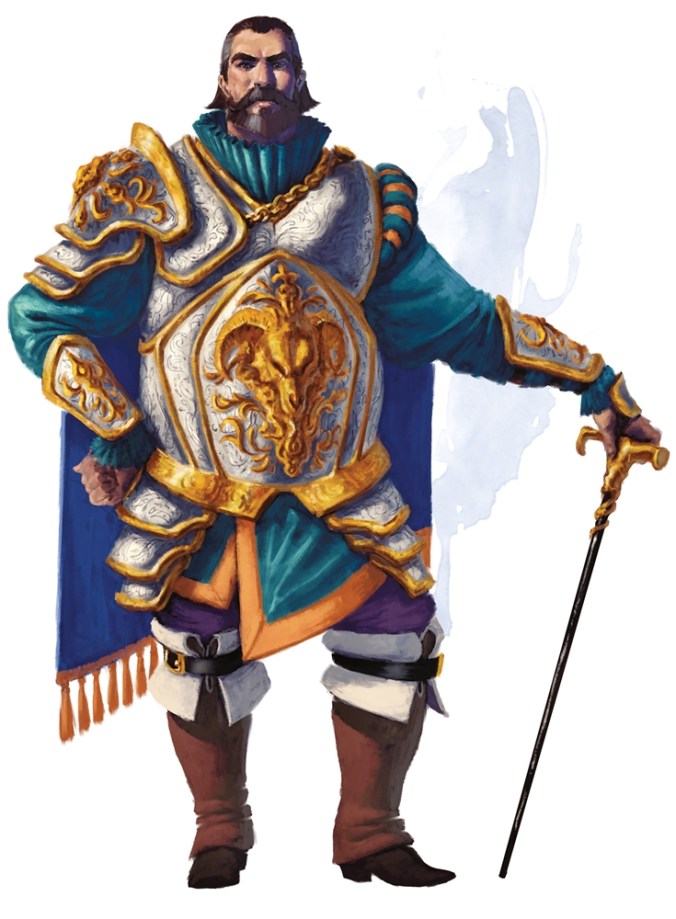
Your players are going to want to kill this Noble.
But they shouldn’t. Because killing a Noble brings its own problems. By the nature of their position in society, a noble is – legally speaking – “better” than everyone else. Including your Party. Once the world gets wind of what they’ve done, there’s going to be an entire machine working against them whose sole purpose is to bring them to justice. There should be nowhere in the realms for your Party to hide as they attempt to deal with what happens when you let your short-tempered Rogue take out his frustrations on a rich guy.
Of course, sometimes your story demands a Noble who can actually throw down. Maybe they’ve trained in combat, or maybe they were born with power that goes beyond wealth and title.
If you really do want your Players to fight a Noble and have it be a challenge, the Monster Manual has you covered. The Noble Prodigy is essentially a Sorcerer NPC. They can Charm your Party if they need to, or do massive psychic damage. Their bloodline grants them abilities that elevate them in Noble circles and which – at CR 10 – can prove a real challenge.
Imagine a Noble house headed by this immensely charming and powerful leader. The Prodigy was born with unusual abilities and used them to charm, threaten, and possibly murder their way to the top. Now that they’re there, no one will ever bring them down again. Like some real-world noble families, they may have dozens of children, hundreds of grandchildren, generations of whom are locked in eternal battle with each other to see who will take the throne one day.
The Prodigy keeps them at each others’ throats, enjoying their squabbles while at the same time amassing even more power. If your Party wants to get to the Prodigy, of course, they’ll have to go through the whole family.
On the other hand, if there is one thing Nobles care about, it is appearances. They don’t like to rock the boat, and many noble families will do anything to keep gossip from spreading or other families from looking down on them. Therefore, the Prodigy might be a Noble-In-Exile, banished from their family as soon as their strange nature began to assert itself and threatened scandal in the Court.
That mad Sorcerer your Party meets in the woods? That is the lost scion of a great house, and they insist on your Party’s help to bring them back to their home and the political power they feel they deserve. If they succeed, they’ll have access to an extremely powerful ally.
They may also be complicit in the systematic destruction of several Noble bloodlines, depending on how angry your Prodigy is at their treatment. And, depending on how those Nobles treated their people, it’s entirely possible you now have a nation ruled by a magic-wielding despot whom everyone hates but no one can oppose.
Who ever said having politics in your D&D game wasn’t fun?
 Encounter Every Enemy
Pingback: More Than JAWS: Reef Sharks as Worldbuilding | Encounter Every Enemy
Pingback: It’s Just a Chicken: The Cockatrice Ecosystem | Encounter Every Enemy
Pingback: The Ultimate Gaslighter: The Incubus | Encounter Every Enemy
Pingback: Not a Beach Episode: Merfolk in your D&D Campaign | Encounter Every Enemy
Pingback: Dretch: The Stinkiest Hench Ever | Encounter Every Enemy
Pingback: Iron Golem: The Immovable Object | Encounter Every Enemy
Pingback: Assassins and the Art of Narrative Murder | Encounter Every Enemy
Pingback: Moonlight and Mayhem: Making the Most of the Werewolf | Encounter Every Enemy
Pingback: The Impossible Beast: Hippogriffs and the Power of Contradiction | Encounter Every Enemy
Pingback: Monster #50: The Mirror | Encounter Every Enemy
Pingback: Green Dragons: When Cunning Replaces Cruelty | Encounter Every Enemy