Sometimes the hardest monsters to put into your D&D adventure are the ones who don’t really care about your Players. They don’t have ambition or a grand plan. They’re not guarding a treasure or a secret shrine or holding the password riddle that will allow your Players to get into the forbidden tomb they need to find.
Creatures like the Ankheg don’t really want anything, other than to dig tunnels, find food, and dig more tunnels. Maybe eat a cow from time to time.
If that was all they did, we wouldn’t need an entry in the Monster Manual about them. But anyone who has had to deal with an insect infestation in their home knows that it doesn’t matter that the insects don’t want anything. What matters is that they’re there and they’re ruining everything.
With that in mind, here’s a few thoughts of how you can turn Ankhegs into a real problem that your Players have to solve.
The easiest is to probably frame Ankhegs as being the cost of bringing civilization to the wilderness. This is a theme we’ve gone into a lot in this blog, whether it’s with Dryads or Druids or Awakened Plants. Civilization likes to spread, and most D&D worlds have a lot of room for it to spread into. So you have small farming towns, little villages that are barely under the protection of a government, or frontier dwellers who want to make a life out past the end of the world that they know.
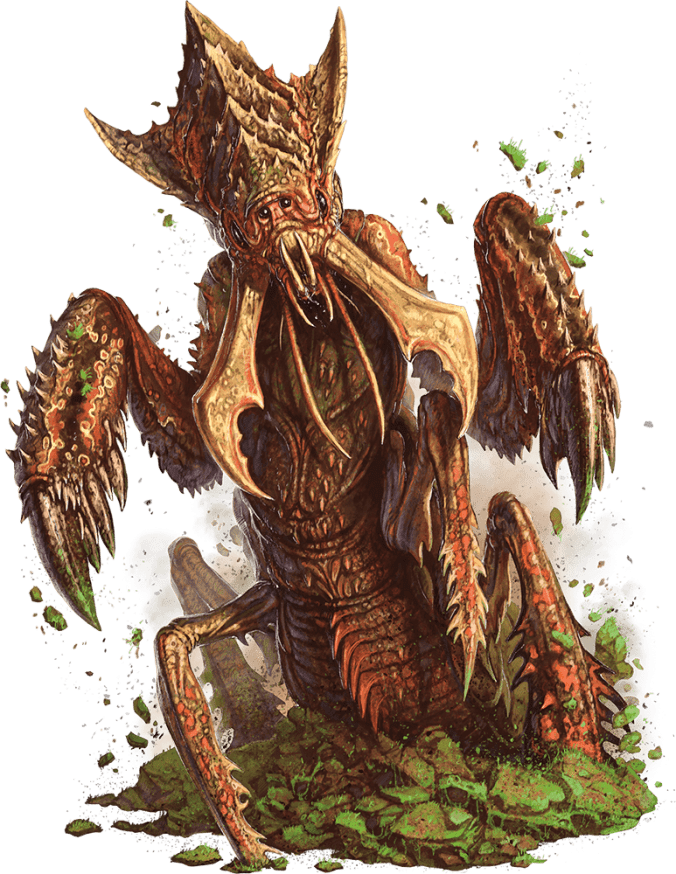
But with that decision comes risks. Some of them are risks they’re probably ready for, like weather or lawlessness. They might not, however, be ready for ten-foot-tall ant-monsters to come tearing up the land that they worked so hard to get under their control. Crops get pulled under the ground, livestock are grabbed and eaten, and all the farmer can do is sit and watch.
Or, alternatively, get a bunch of their fellow frontier farmers to pitch in and pay a group of Adventurers to go deal with the problem.
You can turn the search for the Ankhegs into an adventure all its own, where your Players have to realize that the very ground under their feet cannot be trusted. As you’re mapping out the homestead, for example, decide where the entrances are to the tunnels, but perhaps lay out some places where the ground is just thin enough that a group of armored heroes might simply collapse the tunnel beneath them. And when the dust clears, they discover that this isn’t just one tunnel under a farm. It’s a network that extends much farther than they expected.
This underground infrastructure could give you a whole new set of ideas to play with. For one, they need to figure out how to find the Ankheg. Perhaps they can follow the trail of bones or acid marks to catch up with them, but fighting an Ankheg in its territory is dangerous. They’re strong and tough, and capable of not only striking their prey but also holding it, grappling a Player until it decides what to do with them. On top of that, they can spit acid in a 30-foot line. With their tunnels being only ten feet wide, that means that at least half of your Party is probably going to have to make some lucky Dexterity saving throws in order to avoid taking a healthy dose of acid damage in these confined spaces.
But once the Ankheg is dead, what then? Sure, they could go back to that farmer and collect whatever gold or silver they’ve been able to wrangle. But you’re underground now, and that offers you plenty of opportunities. The Monster Manual even gives you a d8 table to roll on, anything from a viciously mauled scarecrow to a clutch of Ankheg eggs to a passage that leads to a buried ruin or even the Underdark itself.
In that sense, the Ankheg is a great “bridge” monster for any adventure. It can take your Players from the normal everyday adventuring problems to the actual heart of the story that you’re trying to tell.
As we have done with other monsters in this journey, though, we should think of them as being broader than just a creature to kill for XP or to get to the next stage of the adventure. How does the world react to their presence?
Take those farmers from before. Maybe, instead of calling on a bunch of Adventurers to solve their problems, they take the matter into their own hands, becoming accomplished Ankheg hunters. Now they have become a reliable supplier of some sought-after materials, as Ankheg chitin can make excellent armor, and everyone from honest metalsmiths to dishonest burglars have a need for a potent acid. So when your Players arrive, they don’t find people begging them for help. They find people who don’t want the competition.
Or, if you really want to switch things up, perhaps they’ve been over-hunting the Ankhegs, and now their supply is running low. They want your Players to help them hunt down a new nest. Maybe even bring some intact eggs back so they can take a shot at running an Ankheg ranch, which will inevitably go horribly wrong.
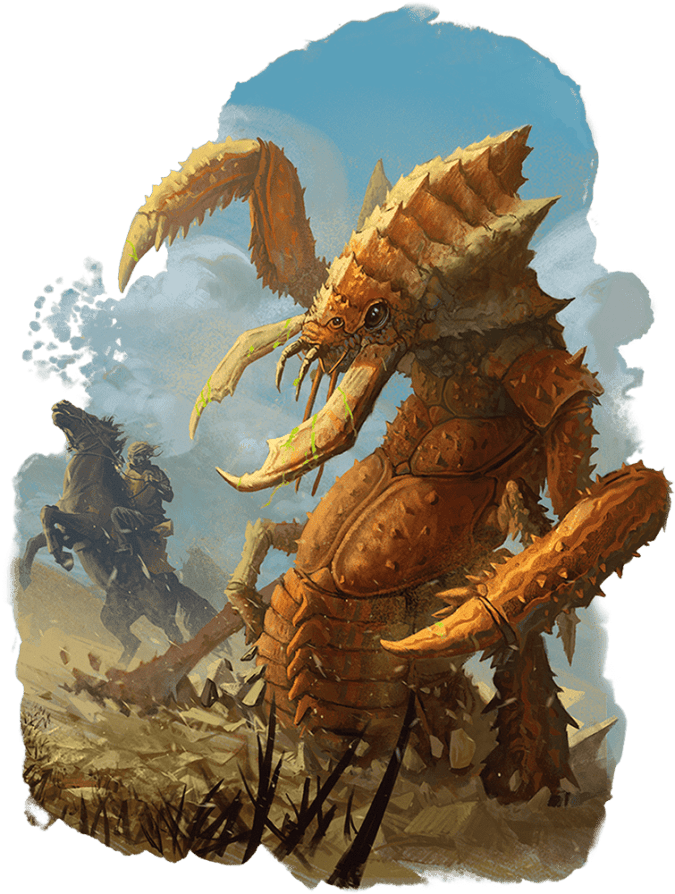
Another thing to consider is where Ankhegs stand in the D&D food chain. As is always the case in the natural world, take them out, and the ecosystem becomes unbalanced.
You might ask yourself, What were the Ankhegs keeping in check? There could be other underground monsters that the Ankhegs preyed upon which are now free to expand their territories. These could be creatures as mundane as Giant Badgers, as incredible as Dragon Wyrmlings, or as strange as Bulette Pups. Your brave Players, having wiped out a local Ankheg problem, may have unleashed a wave of smaller, but equally destructive problems in their wake.
Or, coming from the other direction, perhaps the Ankhegs aren’t the apex predators that they seem to be. In our world, we can see Wolves and Bears move into more settled population centers when their food sources get low, so perhaps the Purple Worms or Remorhazes or Umber Hulks that once ate the Ankhegs now need to search elsewhere for food. “Elsewhere,” of course, being closer to where people live, and now your Players are the only ones who are standing guard against them.
Even the monsters that live without a plan or a grand, world-ending scheme have something to offer at your table. Whether they’re just a lucky roll on the Random Encounter table or the heart of your next adventure, Ankhegs make the world stranger and more dangerous. When you’re done with them, your Players won’t trust the ground beneath their feet the way they used to.
 Encounter Every Enemy
Pingback: Rust Monster: The Confidence Eater | Encounter Every Enemy
Pingback: Beasts of Burden and Emotional Baggage: The Case for the Mule | Encounter Every Enemy
Pingback: Cats: A Hidden World in Plain Sight | Encounter Every Enemy