Everybody loves Kobolds. This is just an objective fact – I’d show you the math, but it’d be too complicated.
Players love Kobolds because they’re the gatekeepers to Dragons. They aren’t that hard to kill in combat, and doubtless have access to great loot. And they’re just cowardly enough that you can intimidate them into doing your bidding before you either adopt them as the Party Pet or kill them once they get annoying. They’re just little guys, y’know?
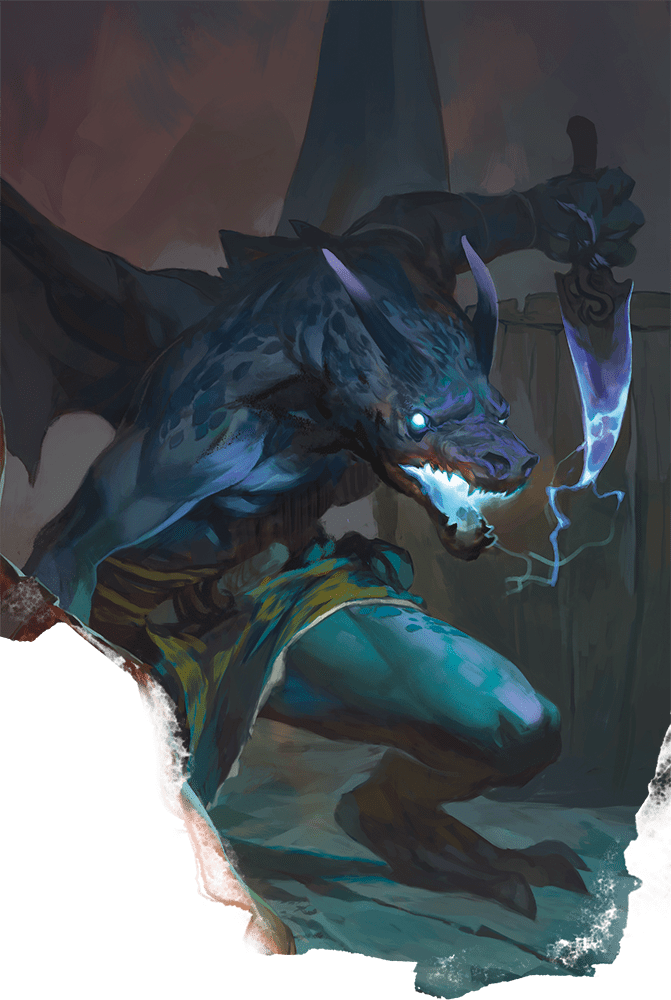
Dungeon Masters love Kobolds because they know that yes – they’re just little guys – but little guys en masse can be a real problem. You’ve read up on Tucker’s Kobolds and dug deep into the classic, old-school, save-versus-death traps that Gary Gygax and his crew used as character disposal machines. Deep in your dark heart, you’re looking forward to seeing your overconfident Players’ faces the first time one of them falls into a pit trap occupied by a Gelatinous Cube that’s been doused in flammable oil.
And that’s the thing – so much has been written about Kobolds already, it’s hard to find a new angle on these creatures.
If you think about it, though, everything about Kobolds really revolves around one central, very important question: what does it mean to have a society that is built around vulnerability?
Because that’s what Kobolds are – vulnerable. And they know they’re vulnerable.
That’s why they serve greater Dragons, because the Dragons will protect them. That’s why they build elaborate traps, because Adventurers want to loot them. Kobolds know that, given the chance, the world would eat them alive. And so they create a society that does its best to make sure that will never happen.
Now those traps aren’t just the DM being a jerk – they’re demonstrating the Kobolds’ understanding of how the world works: stronger beings are going to come and kill you, so you had better make them bleed for it. This way of looking at Kobolds turns them from little scaly jokes to some of the most interesting creatures in D&D. Maybe more than any other being, they understand that fighting fair is the way you die.
Think about the Kobolds’ relationship to Dragons. For a Kobold, the Dragon is more than just a protector. It is proof that maybe someday, small, scaly creatures can become truly untouchable. So they serve their giant kin, making sure they have everything they need, not because Kobolds are servile little lickspittles, but because this creature is (in their minds) one of them. A Dragon that can withstand any Adventurer that comes their way.
Dragons are aspirational to them, so they’ll take any threat to their Dragon or its hoard seriously, and will defend it to the best of their ability.
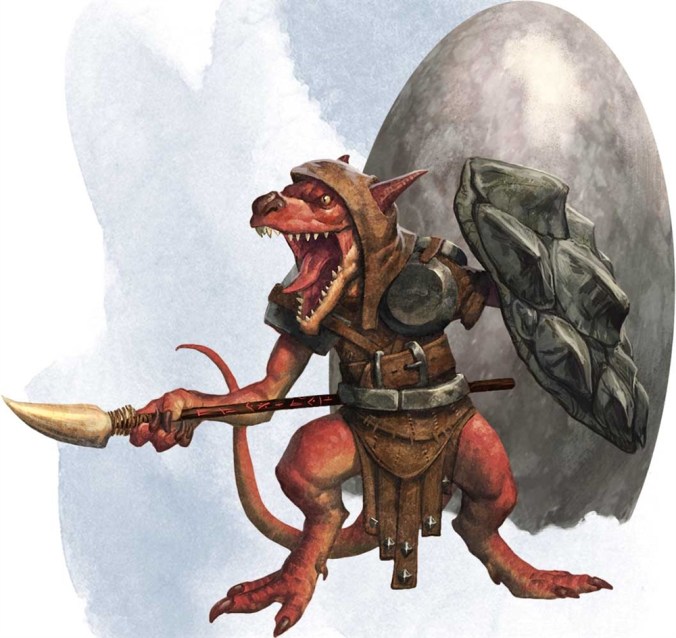
And for Kobolds, “the best of their ability” means engineering feats that would make the greatest builders of any world weep with jealousy.
There are tiny tunnels, perfect for a Kobold, but just slightly too small for your Adventurers to walk upright. Pressure plates that won’t trigger for something of Kobold-weight, but will absolutely bring the ceiling down on a Paladin in full plate armor. Tiny holes bored into the walls that hide spikes or gas pipes or hornet nests or acid conduits. All of these things aren’t the Kobolds being jerks: they’re the collective intelligence of a people who understand their place in the world and will do everything in their power to make sure the powerful cannot get to them.
With all that in mind, how does this fit into the campaign world that you’ve built?
Let’s start with the big question: what happens to the vulnerable in the world that you’ve created? The poor, the sick, the disadvantaged? Do their leaders care for them, or are they left to their own devices, defenseless against the powerful and ambitious?
Perhaps, in a particularly harsh kingdom, the poor and downtrodden are regularly abused and exploited by their rulers. Hoping to change this, someone has made a deal with the Kobolds: teach us your ways. The Monarch of this kingdom has long sent soldiers and Adventurers to eliminate Kobolds as though they were pests, and they pose a recurring threat to the Dragons that they serve. So a former Adventurer, fallen on hard times, makes a deal with the Kobolds they used to hunt: teach us how to live like you do, and we’ll keep this kingdom occupied, too busy sending their Guards and Soldiers into our own meat grinder to bother you.
Maybe the Kobolds take them up on this offer, buying the time they need to strike while the Kingdom is devouring itself from the inside. Or to relocate their Dragon somewhere safer. Either way, you now have a fun moral dilemma to throw your Players into. Are they approached by the Nobility of this Kingdom, asking them to help put down a rebellion? What will they do when they find out what lengths people have gone to in order to survive?
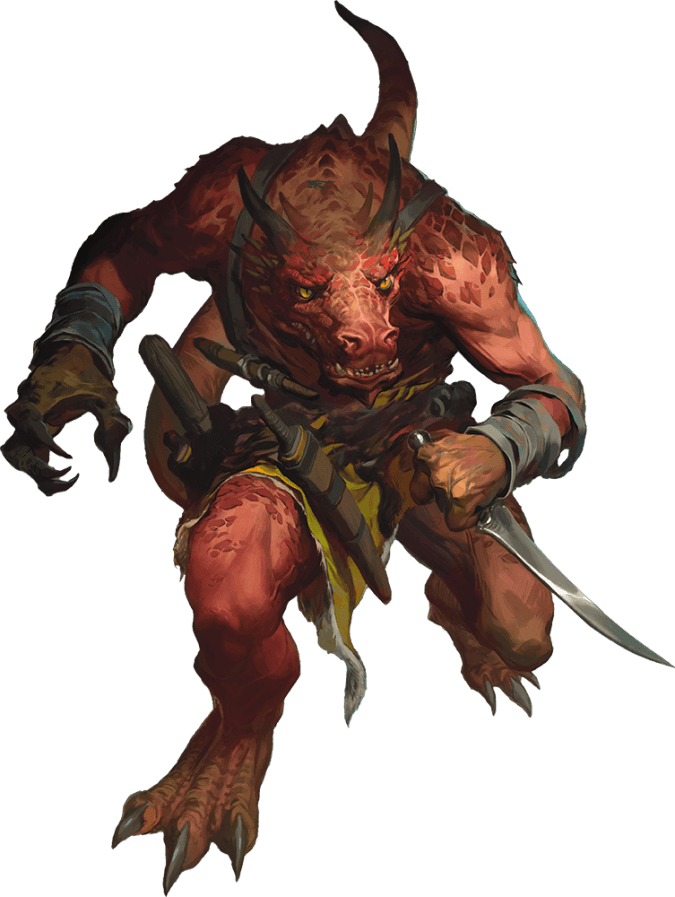
Or are they sought out by those behind the uprising, hoping that a little extra muscle will turn the tide? How will your Players react when they find out that one of the chief architects of their defenses are some small dragonkin?
If we return to our more conventional Kobold scenario, this reframing of who and what they are should make their vicious trap obsession mean something very different. The focused lethality of Tucker’s Kobolds is no longer about a bunch of tiny monsters who’ve outsmarted the Big Folk. It’s about how these creatures engineered their entire world on the assumption that something bigger and stronger than they are will inevitably come to kill them.
Even the Dragon that they serve is not immune from their suspicion. After all, even if the Dragon is one of their own, it is still so much bigger and more powerful than they. Just as when anyone gains power and influence, how do they treat those who are working for them? What are the Kobolds willing to put up with in return for the Dragon’s protection? Their Dragon might treasure their service, sure, but they also might treat the Kobolds as disposable servants, devourable if they should disappoint it.
Do these Kobolds have a plan for their Dragon, if things should go too far? Or is their devotion absolute? What happens when your Players stumble upon Kobolds who’ve had just about enough of Kreknethor the Red devouring them like popcorn and suddenly change the balance of power just by being there?
Let’s face it: at its best, vulnerability creates cunning. When you can’t fight fair, you fight smart. When you can’t overpower, you outthink. Kobolds have had centuries to perfect this, and it shows in every trap, every tunnel, and every calculated risk that they take.
Your players don’t have to pity the Kobolds. But when the “disarmed” tripwire triggers the real trap? When the tunnel drops them into a pit of spikes and snakes? When they realize the entire warren was designed to bleed them dry one step at a time?
They may not enjoy having to make a new character, but at least they’ll understand why.


Pingback: Beasts of Burden and Emotional Baggage: The Case for the Mule | Encounter Every Enemy
Pingback: Blood and Bother: Deploying Stirges with Style | Encounter Every Enemy
Pingback: Monster #50: The Mirror | Encounter Every Enemy
Pingback: Rust Monster: The Confidence Eater | Encounter Every Enemy
Pingback: Green Dragons: When Cunning Replaces Cruelty | Encounter Every Enemy
Pingback: Red Dragons: The World According to Fire | Encounter Every Enemy
Pingback: Pirates: Play the Game or Play Your Own | Encounter Every Enemy
Pingback: Monster 100: Every Monster Matters | Encounter Every Enemy