Your Party is traveling from one adventure to another, as Adventuring Parties so often do. Then, from out of the woods, a tiny, polychromatic dragon, maybe the size of a cat, flits out of the shadows towards them. It weaves and bobs, and stops about ten feet away. Everyone hears a jovial lilting voice in their head – You look bored! – and then the dragon exhales a cone of sweet-smelling glittery steam.
And now they’re just wandering around in circles, giggling at vapor trails and talking to little fluffy things that dance just out of reach.
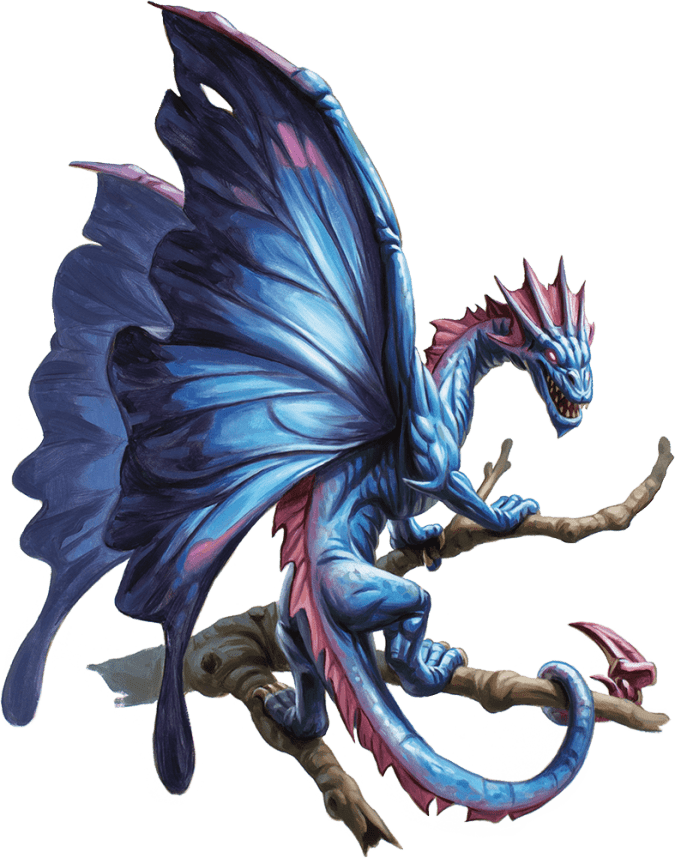
Despite its name, a Faerie Dragon is not a creature of the Feywild – it’s a proper Dragon, but it’s been touched by that strange, impossible place. Where other Dragons hoard treasure and followers, Faerie Dragons gather experiences and amusements and stories. They don’t want your magic sword – they want to see how you react when your horse starts singing Elvish drinking songs.
It would be very easy to play Faerie Dragons as whimsical pests, and there’s probably a place for that in your campaign. But what else could a Chaotic Good prankster Dragon do for you?
The trouble with having a Trickster in any story is how to make them useful instead of a punchline or just a wacky distraction. Because Faerie Dragons deserve better than that.
One idea to explore is what Chaotic Good actually means. There are a lot of ways to address this, but for Faerie Dragons, I think it can best be summarized this way: Faerie Dragons believe that whimsy is worth defending, even when no one asked them to.
Imagine a Faerie Dragon that is intently focused – for reasons of its own – on helping your Players. It follows them invisibly (cast as a bonus action) and helps when it thinks they need it. It sees people in need of joy, and nothing is going to stand in its way.
But, as is so often the case, what a “helpful” person thinks is helpful might not be what is actually needed. So, as your Players are facing off an angry Dire Wolf, they suddenly find one of their number Polymorphed into a Polar Bear for no readily apparent reason. Or the land between them and a gang of threatening Bandits suddenly appears to erupt into flowing lava as the Dragon casts Hallucinatory Terrain to keep them safe.
These are helpful, but nobody asked for that, and your Players are probably going to be less than thrilled about someone with magic powers interfering in their mission.
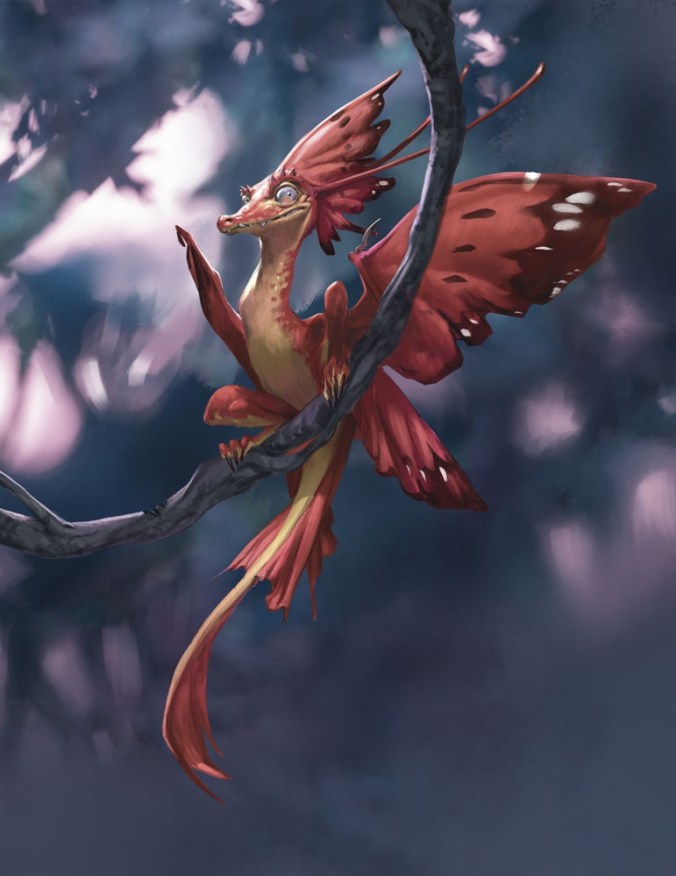
And even if it does help, how much are your Players going to put up with? When does being relentlessly helpful turn into being kind of a jerk? How do you tell someone that you don’t want their help anymore, especially when they are so very eager to offer it?
If you’re running a grimdark campaign, a Faerie Dragon can be an unexpected addition. Somewhere amidst the thrones of skulls and black iron armor there’s this little iridescent creature, trying its hardest to bring some version of whimsy to this sad, dark world.
Of course, it can’t just be gags. Nothing ruins a villain’s Big Bad Guy Speech like a shiny little dragon showing up and barfing hallucinogens in his face. But there should be room for exploring what joy means in the darkest of places, and why it might be a good idea to hold that joy close, even when things seem to be at their bleakest.
There could even be a community in this terrible world that provides a home for the Faerie Dragons. It’s an oasis of kindness and goodness in a land of selfishness and cruelty, and if you play it right, your Players will fight to the death to keep it alive against the onslaught of nihilistic fury.
One more fun angle might be to put Faerie Dragons up against their larger, more dangerous counterparts. How might the “real” dragons interact with their weird, fey-touched cousins?
Perhaps a Copper Dragon – and they are known lovers of pranks and jokes themselves – has Faerie Dragons in their retinue. In order to gain an audience with the Great Copper Dragon, your Party will have to get through their bodyguards without being polymorphed, drugged, and relentlessly tripped up by invisible winged creatures. Perhaps if your Party is insufficiently whimsical, their audience could be denied, so make sure your most stoic, by-the-books Paladin knows a few good dad jokes.
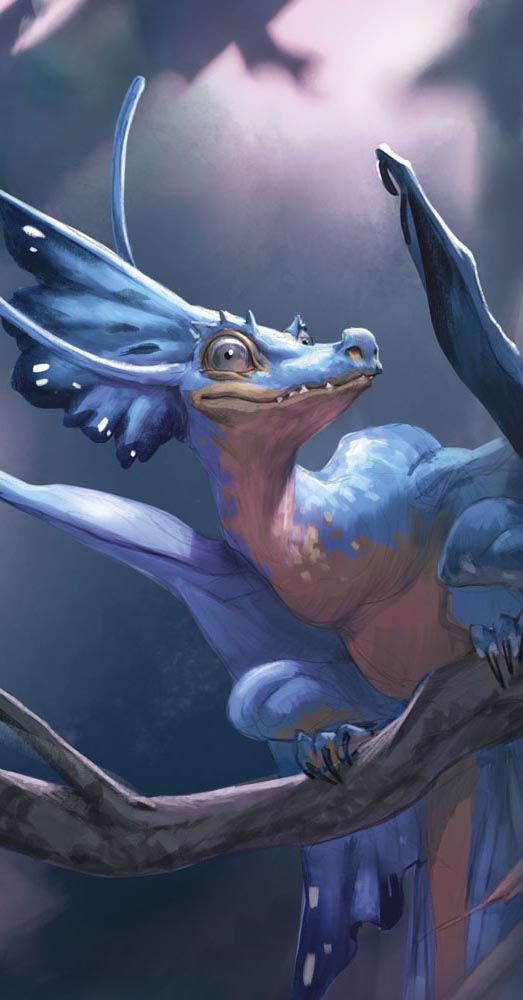
The Chromatic Dragons would probably benefit from having a Faerie Dragon around as well, mainly for the sake of comedy. You have your deadpan, dry, scheming Green Dragon carefully laying generations-long traps amongst the residents of a wealthy village, only to have Goofknuckle the Faerie Dragon come in and ruin everything with a few short words to the wrong person they’re trying to lift out of a funk.
Adventures are usually about the high drama – life or death, world-ending threats, personal vendettas, undead armies. Silliness happens, but it’s usually players letting off steam, not characters trying to find joy while hunting monsters. Faerie Dragons are the exception. They’re creatures whose entire purpose is bringing whimsy to a world that doesn’t usually have time for it, and finding ways to use that at your table can be a worthwhile challenge.
Faerie Dragons are pure Chaotic Good contradiction: they do good without permission, bring joy without consent, and they help whether you want it or not. Your Players don’t get to opt out of the whimsy, but neither does the villain. Maybe that’s the point: joy doesn’t wait for the right moment. It just shows up, uninvited, and makes you deal with it.
That’s beautiful and kind of terrible and exactly what makes them dragons.


Pingback: Monthly Monster Mashup 14: Spectator + Faerie Dragons | Encounter Every Enemy