There’s something wonderful about being a Dungeon Master.
Every week, I invent something – a place or a character or an event – and I put it in front of my Players. My Players interact with what I have created, and then… it becomes real. Not in the same way that, say, a brick wall is real, but they behave as if it were. They’re worried about facing the flocks of Harpies that I’ve put in front of them, and thrilled when they run through them like a buzzsaw. They invoke incredible magic and abilities that no human being has ever possessed, but they think about their efficacy with the utmost seriousness.
I make something out of nothing. The Players choose to believe it. It becomes real.
Of course, we all know it’s a game. When the game ends, the reality ends.
But… what if it didn’t? What if we still believed in those Harpies after we walked away from the table, or if I convinced more than just my Players of their reality?
Honestly, get enough people to agree on something, and you can change what is real. And no one knows this better than the Kuo-Toa.
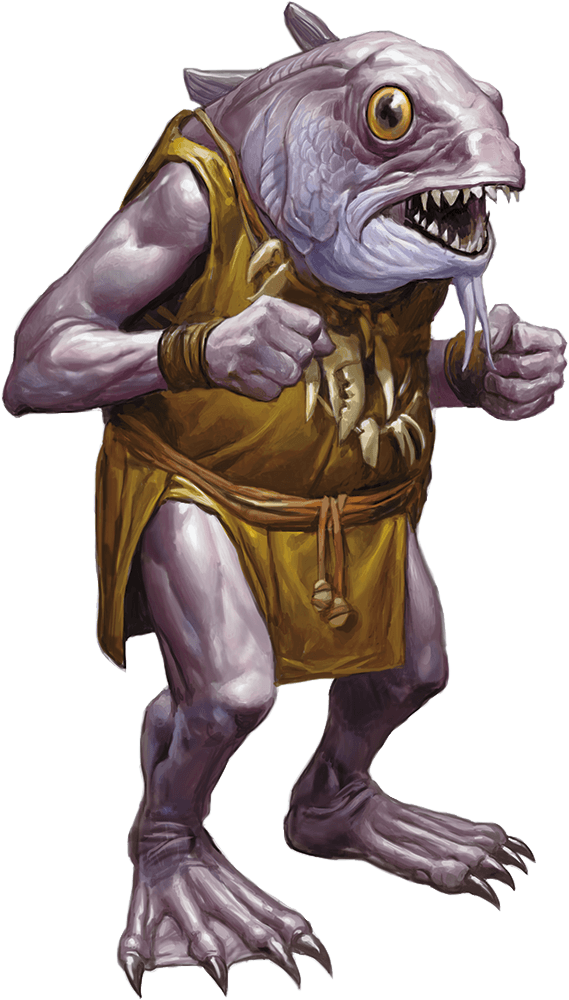
Kuo-Toa are strange, fishlike humanoid creatures who inhabit the world’s dark waters. They can be found in the deepest seas, especially in the Underdark, where they thrive. They are said to have once had a great civilization of their own, but no one can say quite what happened to it, and so now they live in ramshackle villages, preying on any thinking being that might come by and sacrificing them to their dark gods.
And the Kuo-Toa gods are very strange indeed.
According to the Lore in the 2014 Monster Manual, the Kuo-Toa have the ability to, if enough of them believe, manifest a god from nothing but their collective subconscious. This isn’t god-making the way we humans do it, where we cobble together gods out of documents and prayers and heartfelt need. This is exactly what it says on the tin: gods are made real through the collective belief of these strange, fishy aberrations.
This, of course, is a brilliant invitation for D&D shenanigans.
Imagine your Players, exploring the Underdark, come across a Kuo-Toa village. They encounter these strange, gibbering fish people engaged in an internecine battle over sacrificing their new visitors, and the reason the Kuo-Toa are squabbling is because they don’t actually have a god to sacrifice them to. Someone killed their last one. Perhaps another adventuring party, maybe a Drow strike force, or perhaps their god was eaten by one of the giant, terrible squid things that live in Darklake. Either way, they have to sacrifice your Players to something, and once they figure that out, then it’ll be real and the fun can begin.
This could give your Players a great chance to meddle in another culture that they don’t properly understand, which is one of the core tenets of Adventuring.
What do you need to build a God? You need symbols. You need stories. You need relics. And here are these outsiders with magic weapons and powerful spells who might, with high enough Charisma rolls, be able to convince these strange people that they are the gods they have been seeking.
And this gives you the opportunity to lean back from your DM screen and give them the smile that says, “Be careful what you wish for.”
Because if the Party’s Bard can, in fact, convince the Kuo-Toa that she is their new God, then it becomes real. Your Bard becomes a divine figure, and maybe you could give her some divine powers out of the Cleric class, just as a treat. She will be worshipped, revered, and protected by the Kuo-Toa that made her.
She will never be allowed to leave.
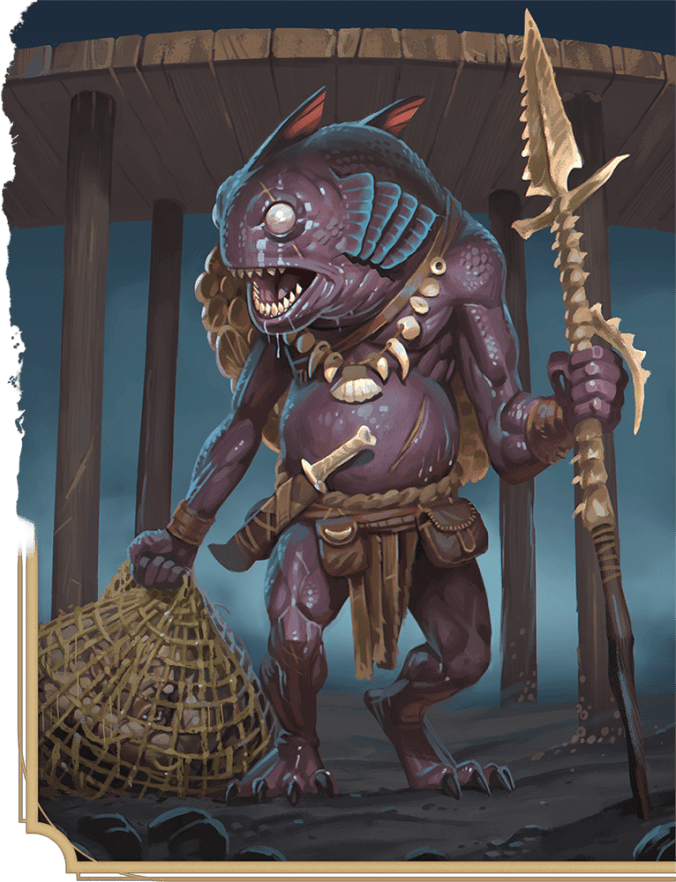
Now your Party’s mission has shifted. Whatever else brought them to the Underdark, their new priority is smuggling this new god out from under the people who truly, fanatically believe in her. And we all know that when people fight for their god, there is very little that they will not do in order to win. When you finally find your god, after all, you have a responsibility to it – to protect it and keep it and, more importantly, make sure it does its godly duties.
That suggests something else very interesting implied by the way the Kuo-Toa make gods, and it makes me think of Awakened Plants: what is it like to be called into existence and worshipped by beings that have some very specific demands of you? Make the waters bountiful. Protect us from the Drow. Bring death to our enemies. Gods are not mindless beings. If the Kuo-Toa can create a genuine god, then they’re also creating a genuine person, so… what if they don’t want to do what they’re told?
Night after night, in the depths of the Underdark, your Players have dreams. Strange, wet, fish-smelling dreams where a small, terrified voice begs for their help. They are led through those dreams to a Kuo-Toa village, where the local god has decided that it doesn’t want to do this anymore. Maybe the reason they made it no longer exists. Maybe it wants to be a different sort of god, or even simply stop being a god at all. And your Players, it is sure, are the key to its eternal freedom.
Will your Players give the god the liberty it seeks? Does it matter that it was created by people who needed it? Should god have the same agency over their existences that any other creatures do? These are very big questions to be asking in a weekly tabletop game among friends, but it could turn into a fascinating adventure as they figure out how to give this god its freedom.
It’s remarkable what we can do with these strange, fishlike creatures once we start unpacking the lore that they came with. You could, of course use them in other ways. They’re great as minions for larger, more powerful creatures – especially an Aboleth, which would fulfill their need for a god pretty much on its own – but that would be missing out on what these creatures mean, both in terms of the game and in terms of how we think about reality and how negotiable it is.
Every session, you and your Players come together in an act of shared belief.
Wouldn’t it be interesting if what you believed in started to believe in you as well?
 Encounter Every Enemy