When I started this project, I thought I knew what a Monster was. It was whatever looked cool, had a couple of neat tricks up its sleeve, and hopefully would be able to give my Players a bit of a challenge. A Monster was something that I looked at for an encounter and then never really thought about again.
After a year and a half, however, I found myself obsessed with what Monsters actually mean. More importantly, about what happens when you stop treating Monsters as disposable and start treating them as essential parts of your world.
What happens is that you discover all the things that a Monster can do. Sure, it can fight your Players, maybe even kill them. But it can do so much more if you just give it a chance.
Every Monster you put in your game is a teachable moment, for both you and your Players.

Monsters can teach us about Fear
Sure, one of the big things we fear is death, and that’s always a threat when Monsters come around. But there are so many ways that a DM can make use of fear in a campaign, and so many Monsters that will let us explore it. Monsters like Vampires and Werewolves and Slaadi remind us of the fear that come from having yourself bodily changed. Green Dragons raise the fear that your will is not your own, that there are smarter and more terrible things out there that will happily manipulate you for their own gain. Even the little Rust Monster is an agent of fear – the fear that the tools we use are temporary and weak, and that if we are deprived of them, we will no longer rise to the challenge.
Monsters can teach us about Power
We’ve explored so many kinds of power in this blog. We have the overt and terrible power of a Red Dragon, burning everything it sees until it gets what it wants, and the subtle, un-asked-for power of the Giant Elk as the protector of the forest. We’ve seen what happens to the powerless, like Kobolds and Commoners and how they are so very vulnerable to a world that rewards power whenever it can. D&D is a power fantasy, and it’s worth it to your Players to show them that power comes in many forms, from the raw animal power of the Polar Bear or the Dire Wolf, to the more subtle, seductive power of the Dryad.
Monsters can teach us about Adventure
By default, a D&D story is an adventure. Your Players take great risks to reap great rewards, and the Monster Manual is happy to provide them with chances for truly incredible experiences. But adventure has to mean more than just fighting Pirates or outsmarting Jackalweres. In a story, an adventure is a response to a disruption in normal life. A great arch-lich is trying to remake the multiverse in his image, perhaps, or there’s an opportunity to rob a vault of an unimaginable amount of gold. The Monsters act as both the impediments to that adventure as well as signposts. Kill the Wight to get to the tomb, or negotiate with the Guardian Naga to find the hidden temple. Without Monsters to provide that necessary push-and-pull, your adventures would be easy. And, by being easy, they would lack meaning.
Monsters can teach us about Players
Along the way, your Players can think about why adventure is something that D&D Players have been craving for fifty years. What is it that this game does for us that so many other games don’t? It’s not surprising that there are people who find personal growth through D&D because fighting the Monsters at the table gives them the strength to fight the Monsters in their lives. Once you and your friends have banished Vecna to the everlasting void, dealing with Fred in HR seems like much less of an impossible task.
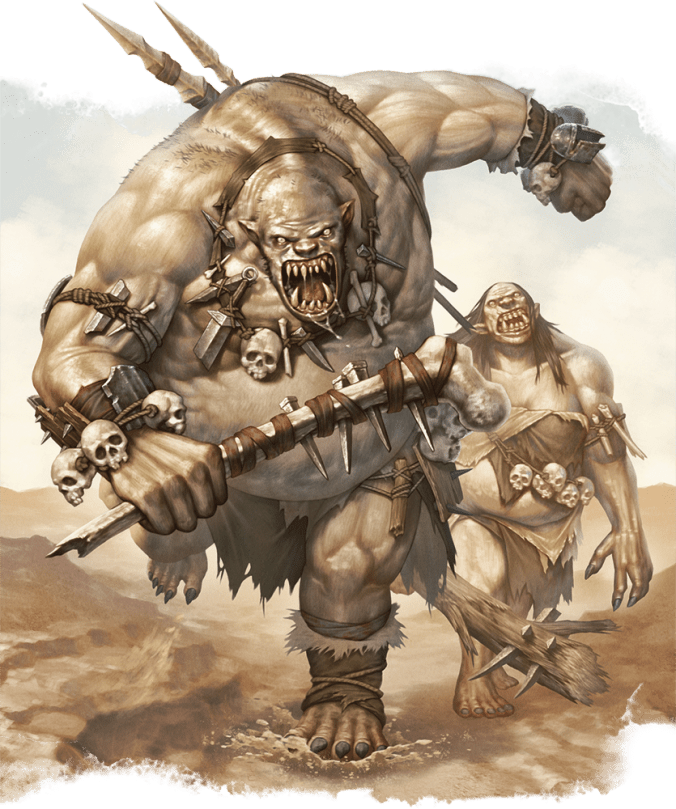
On top of that, how your Players deal with your Monsters will tell you a lot about who they are. Some Players will see an Ogre in a room and charge straight at it, swords and spells blazing. Others will opt for deception and trickery. Some will try to talk their way past it, or even make friends.
And mine will Polymorph it and shove it into lava. Each Monster is a revelation.
Monsters can teach us about Ourselves
In a lot of ways, D&D is a game of self-discovery. The Monsters that we love to fight, or the ones that give us the most trouble, can teach us about what is important to us. Are you the kind of Player who bristles every time a Noble is introduced? Are your favorite Monsters to run the ones that rely on powers other than fighting, like the Banshee or the Incubus? Do you just enjoy throwing chaos at your Players with the occasional Giant Weasel or Chimera?
We tend to gravitate towards Monsters for two reasons: One is that the Monsters we love are reflections, however dark, of ourselves. We see something in them that we see in our own hearts, and want to give that some sort of expression. We want to be strong or clever or seductive, and so we choose Monsters that let us be that.
The other is that the Monsters we love are the things we love to hate. We hate how the strong dominate the weak, or how the greedy always seem to get what they want. We hate people who prize knowledge over doing the right thing or who treat people as assets to be bought and sold and used. So when we flip through the Monster Manual, those are the pages that cause us to linger, knowing that we can use them to tell a truly great story.
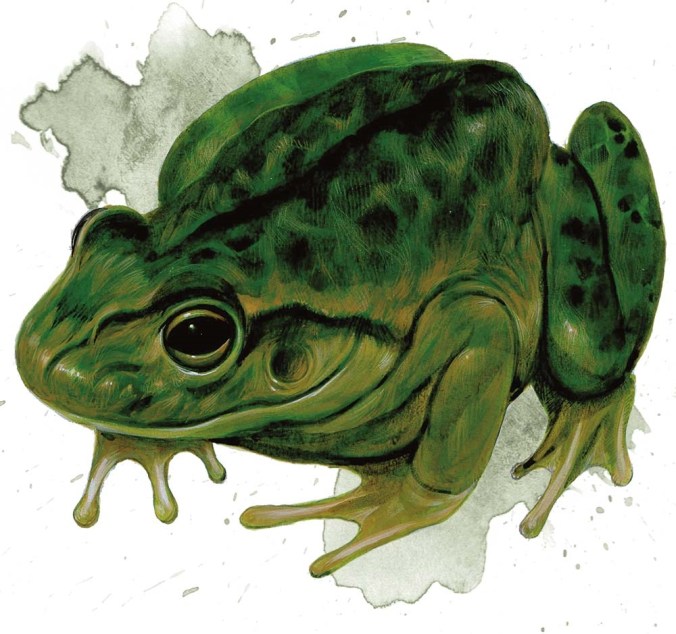
Over the last year and a half, I looked for meaning in the Monsters, and I found it – even in the most humble entries, like the Deer or the Seahorse or the Frog. And even just the process of posting a thousand words every week was instructive in itself.
I have a Google Sheet that provides me with my Monsters randomly, so I don’t know which one is next until I hit a little button. That not only ensures that I won’t spend half a year only talking about Dragons, but it also makes me think flexibly and be ready for anything. One week I’m writing about an Elk, the next – an Elemental Cataclysm. Sometimes the gears in my brain make a very entertaining grinding sound going from one week to the next, but it’s helped me be creative and take things as they come so I can create what I hope is a useful resource for Dungeon Masters.
It’s been kind of lonely work as well. It’s been a little over a year and a quarter of regular entries, certainly more than 100,000 words, promoted over at least six different platforms, and the feedback has been pretty minimal. In all the time I’ve been doing this, I’ve gotten two comments and nine subscribers.
Now I understand that the Age of the Blog passed around 2007, but the good news is that writing this in a kind of vacuum has had its own benefits. I’m writing for myself, working my own creative muscles, and even looking for ways to make my own D&D games better. By writing this on my own, I get to really dig into my own creative resources to figure out what these Monsters all mean to me.
And if someone, somewhere gets good ideas from it as well? Then that’s a solid bonus.
Honestly, if I were doing this for the praise and the congratulations and the job offer from Wizards of the Coast to join them and get a weekly video deal where they handle all the production and I become a household name in D&D and Matt Mercer and I hang out on the set of Critical Role and what’s that, Mr. Mercer? You want me to sit in at the table? Don’t mind if I do! What? Brennan Lee Mulligan, what are you doing here?
….
Sorry, I got distracted, where were we?
Ah, yes. If I were trying to make a buck off this blog, I would have quit somewhere between the Giant Owl and the Swarm of Venomous Snakes. But I’m doing this because it has genuinely been a lot of fun to write. It’s tested my creativity and my assumptions all in different ways, and I honestly hope that people have come through here and taken away some good ideas to bring to their table.
D&D can be so much more than just a series of combat encounters and carefully curated stat blocks. With a little creative thinking and some players who are willing to put up with your new ideas, you can craft excellent encounters, adventures, and even whole campaigns around nearly every Monster in this book.
After 100 Monsters, I’m more convinced than ever that the Monsters matter. More importantly, that attention matters. That if we pay attention to the things around us, even the smallest things, that we can learn from them, and I know that the hundreds of Monsters remaining still have things to teach me.
So come on. Study your spells, sharpen your swords and get ready.
We’re only a third of the way through the book, there’s all kinds of things lurking in the darkness, and I can’t wait to find out what they are.
 Encounter Every Enemy